Unreal Engine 5
The Hive SDK used in the Unreal Engine development environment consists of an Interface package and Platform packages for each target OS (Android, iOS, Windows). You can selectively install only the Interface package and the Platform package that matches the target OS of your game app.
- Hive SDK Unreal Engine 5 Interface (required)
- Hive SDK Unreal Engine 5 Platform (install only the Platform package for your target OS)
- Hive SDK Unreal Engine 5 Android
- Hive SDK Unreal Engine 5 iOS
- Hive SDK Unreal Engine 5 Windows
Note
For more information about plugins and modules, which are components of an Unreal Engine project, refer to the links below.
Hive SDK installation
Step 1. Download the latest Hive SDK version
Download the Interface package and the Platform package for your target OS from the latest Hive SDK Unreal Engine 5 version.
Step 2. Install the Interface package
-
Unzip the downloaded Hive SDK v4 UE5 Interface 26.x.x.zip file, then add the HIVESDK folder to the following Unreal Engine project path.
- Path:
/Plugins
- Path:
-
Add the dependency code to the Build.cs file at the path below to use the installed Interface package.
- Path:
/Source/ / .Build.cs - Dependency code:
- Path:
Step 3. Install the Platform package
Unzip the downloaded Hive SDK v4 UE5 {Target OS} 26.x.x.zip file, then add the generated folder to the following Unreal Engine project path according to your target OS.
- Path:
/Plugins/HIVESDK/Source
Note
In the Hive SDK, during the packaging stage where executable files (.apk_, _.IPA, *.exe, etc.) are created after building the game app, the code and resources of the Platform packages added to the above path are automatically included in the executable files for each target OS.
Package compatibility
The Interface package and Platform packages can be used together even if their versions differ, as long as they follow the package compatibility rules below.
- Compatibility is supported only at the
patchversion. level within themajor.minor.patchversion format. If. themajorandminorversions do not match, the packages. are not compatible.- Example 1: If the Interface package version is 26.1.0, only Platform package versions 26.1.x are compatible (e.g., 26.1.1, 26.1.2).
- Example 2: If the Interface package version is 26.1.0, Platform package versions 26.0.0 or 26.2.0 are not compatible.
Hive SDK update
To manually update the Hive SDK, remove the previously installed Hive SDK and then install the latest version.
Step 1. Remove Hive SDK
Remove the Interface package
- Delete the
/Plugins/HIVESDK folder in Unreal Engine. - Remove the dependency code from the Build.cs file at the path below.
- Path: Unreal Engine
/Source/ / .Build.cs - Dependency code:
- Path: Unreal Engine
After removing the Interface package, you must restart Unreal Editor to recompile due to the changed project structure.
When you restart Unreal Editor, compilation proceeds automatically based on the updated project structure. At this point, if binaries compiled from the previous project structure remain cached in the Intermediate and Binaries folders, a build error may occur. In this case, delete the Intermediate and Binaries folders, then restart Unreal Editor to recompile and rebuild.
Remove the Platform package
Select and delete the Platform packages installed in the
<project_root>
└─ Plugins
        └─ Source
                ├─ HiveSDK
                ├─ HiveSDKAndroid    (optional)
                ├─ HiveSDKiOS        (optional)
                └─ HiveSDKWindows    (optional)
After removing the Platform package, restart Unreal Editor to rebuild the Editor due to the changed project structure.
Step 2. Install the latest package version
Refer to Hive SDK installation to install the latest version of the Interface package and Platform packages.
Precautions
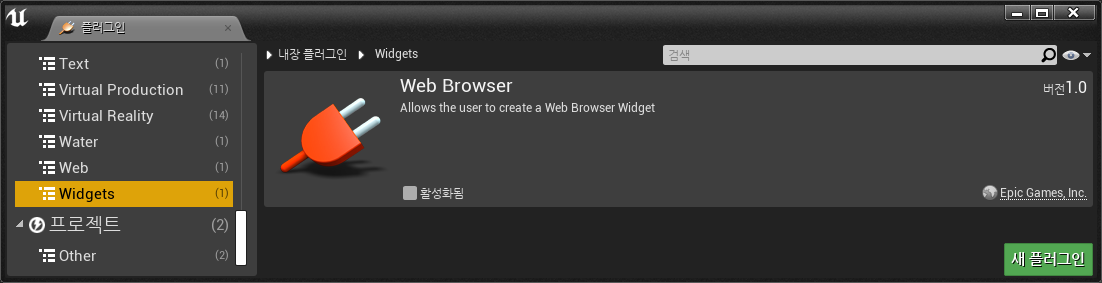
When you restart Unreal Editor, you can install built-in plugins in Unreal Engine. At this time, WebBrowser, which uses CEF (Chromium Embedded Framework), cannot be applied because it conflicts with the CEF used by the Hive SDK.
Warning
WebBrowser CEF is currently not supported for updates and management, so applying it may lead to security vulnerabilities.